Explainer
Comedogenic Ratings Explained: What the 0-5 Scale Can't Tell You
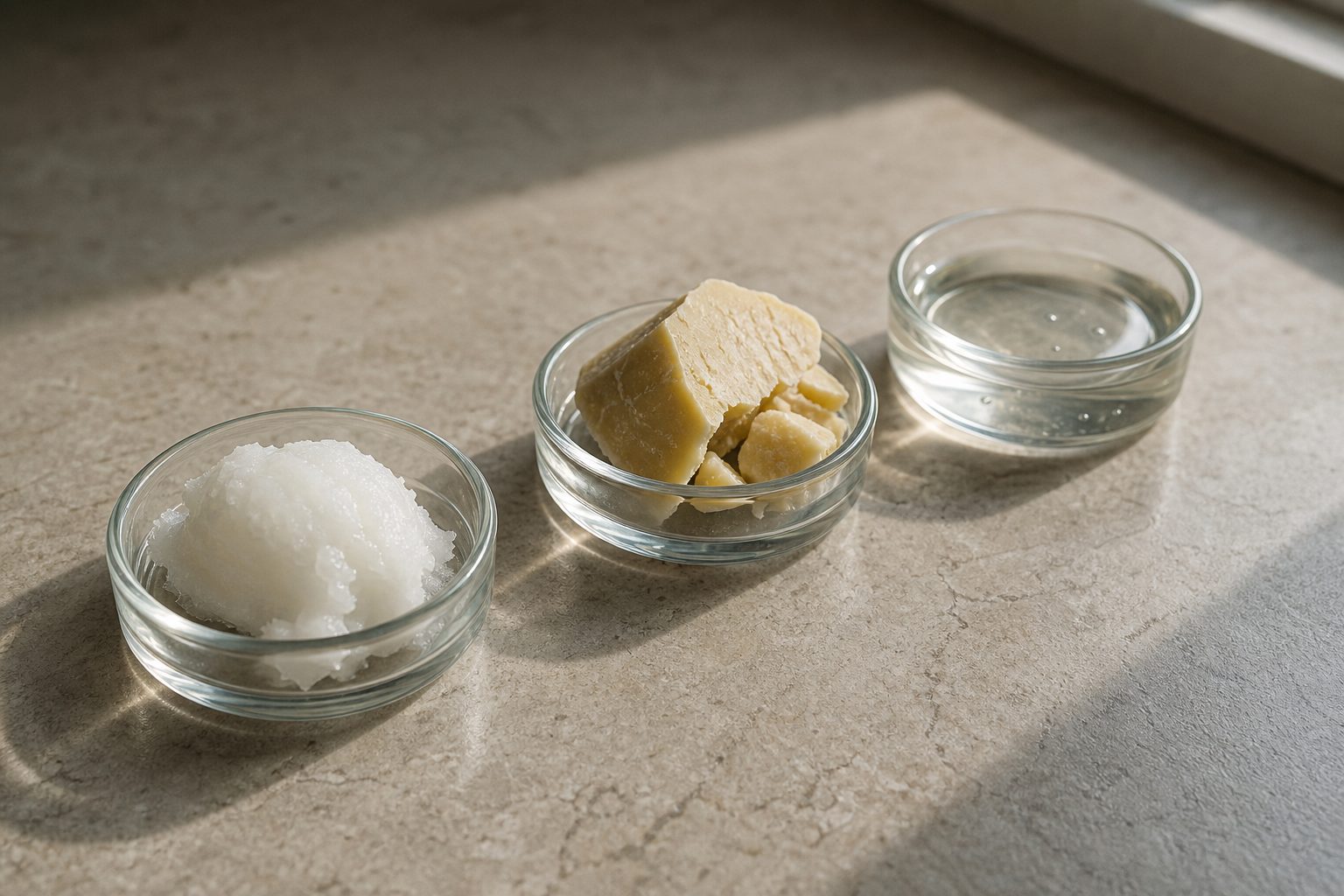
A comedogenic rating is a 0–5 score for how likely an ingredient is to clog pores and form comedones, the plugs behind blackheads and whiteheads. A 0 means no pore-clogging was seen and a 5 means a lot. Most ratings you'll find online trace back to rabbit-ear tests from the 1970s and 1980s, and those tests looked at raw ingredients, not finished products. So a rating is a useful heads-up if your skin is oily or breakout-prone. It can't tell you how a particular moisturizer will behave on your face.
What a comedogenic rating is, and where the 0–5 scale came from
In the 1970s, dermatologists became interested in "acne cosmetica", the idea that some cosmetics cause breakouts. To screen ingredients, researchers applied them to rabbits' ears for about two weeks, then checked how much the follicles had plugged up with microcomedones, the tiny plugs that come before a visible blackhead. Albert Kligman and Terry Kwong published an improved rabbit-ear model in 1979.
The scale most people quote comes from a 1989 paper by James E. Fulton Jr., "Comedogenicity and irritancy of commonly used ingredients in skin care products". Each material went on the inner ears of three rabbits, five days a week for two weeks. The plugging was graded from 0 (no significant increase) to 5 (large comedones throughout the ear), and only grades 4 and 5 counted as positive.
The limits of the evidence
A rabbit's ear is not a human face. A 2025 review by Starzyk and colleagues in JAAD Reviews found that later studies gave inconsistent results when rabbit-ear ratings were checked on human skin. It flagged two core problems: isolated ingredients were tested rather than whole formulas, and individual skin varies.
Worth knowing
A comedogenic rating is a heads-up, not a sentence. Your skin may tolerate an ingredient rated 4, or react to one rated 1. The number tells you where to look, not what will happen.
Pure ingredient vs finished product
A rating describes one raw material tested on its own. In a real product, three things change the picture:
- How much is in there. Labels list ingredients roughly from the largest amount down, so a high-rated oil at #2 matters far more than the same oil at #22. Our guide to reading skincare ingredient labels explains the order.
- The exact form of the molecule. Fulton's own paper reported that chemistry matters. Combining a molecule with a polar sugar reduced its comedogenicity, and more ethoxylation tended to reduce it too, so related ingredients can rate quite differently.
- What else is in the formula. The ratings come from testing raw materials, on the assumption that finished products containing them would behave the same way.
In 2006, Zoe Draelos and Joseph DiNardo tested finished cosmetics containing recognized comedogenic ingredients on the upper backs of six comedone-prone people. They concluded in the Journal of the American Academy of Dermatology that such products are not necessarily comedogenic themselves. Six people is a small study: a reason for caution in both directions, not proof that ratings are meaningless.
Who a comedogenic rating matters for
Comedones form when oil and dead skin cells plug a follicle, so the scale is most useful for skin that already leans that way:
- Oily or combination skin: high-rated ingredients near the top of a leave-on face product are worth a second look, especially across the T-zone.
- Breakout-prone skin of any type: the ratings are your most relevant signal.
- Dry or normal skin without breakouts: a high rating is mostly background. Rich oils and butters are often what dry skin wants.
Ingredients rated 4 or higher on the comedogenic scale (0–5)
These are the entries DermDecode's human-reviewed knowledge base rates 4 or 5, compiled from published comedogenicity tables. None is off-limits. They're worth noticing if you're breakout-prone and one sits high on a face product's label.
| Common name | Name on the label (INCI) | Rating | What it is |
|---|---|---|---|
| Isopropyl myristate | Isopropyl Myristate | 5 | Silky, texture-enhancing ester |
| Myristyl myristate | Myristyl Myristate | 5 | Waxy emollient |
| Wheat germ oil | Triticum Vulgare Germ Oil | 5 | Vitamin E-rich plant oil |
| Isopropyl palmitate | Isopropyl Palmitate | 4 | Slip-enhancing ester |
| Coconut oil | Cocos Nucifera Oil | 4 | Rich, moisturizing plant oil |
| Cocoa butter | Theobroma Cacao Seed Butter | 4 | Rich body butter |
| Lauric acid | Lauric Acid | 4 | Fatty acid, the main one in coconut oil |
Ratings from DermDecode's knowledge base (121 entries, updated August 28, 2026). Myristic acid rates 3. For contrast, shea butter, squalane, dimethicone and petrolatum rate 0, and mineral oil rates 1.
Is coconut oil comedogenic?
On paper, yes. Coconut oil, listed as Cocos Nucifera Oil, rates 4, in line with the published tables. But that number describes the pure oil. A coconut body butter on dry legs is a different situation from a face oil on a breakout-prone chin, and caprylic/capric triglyceride, a light emollient usually made from coconut oil, rates just 1. If you're oily or acne-prone, notice when coconut oil sits near the top of something you leave on your face.

What "non-comedogenic" on a label does and doesn't mean
In the US, "non-comedogenic" is a claim the brand makes. The FDA's page on cosmetics labeling claims says claims must be truthful and not misleading, but the agency keeps no list of approved cosmetic claims and doesn't approve labels before sale. The 2025 JAAD Reviews paper names the lack of standardized testing and regulatory oversight as a major concern, since it lets companies use the label regardless of a product's actual pore-clogging potential.
The label still has some use. The American Academy of Dermatology suggests people with acne look for "oil-free", "won't clog pores" or "non-comedogenic" on makeup, cleansers and makeup removers. Treat it as a first filter, then read the ingredient list.
How to use a comedogenic rating as a heads-up
- Start with relevance: oily, combination or breakout-prone skin first.
- Check the position: the first five spots matter more than the tail.
- Consider where it goes: a leave-on face product isn't a body butter.
- Don't add up a scary total: a few rated ingredients low on the list aren't a verdict.
- Try one new product at a time so you can tell what's doing what.
How DermDecode uses comedogenic ratings
DermDecode reads the ingredient label through your phone camera and checks each ingredient against its knowledge base. The AI only transcribes the label; the scoring is done in code. For pore-clogging:
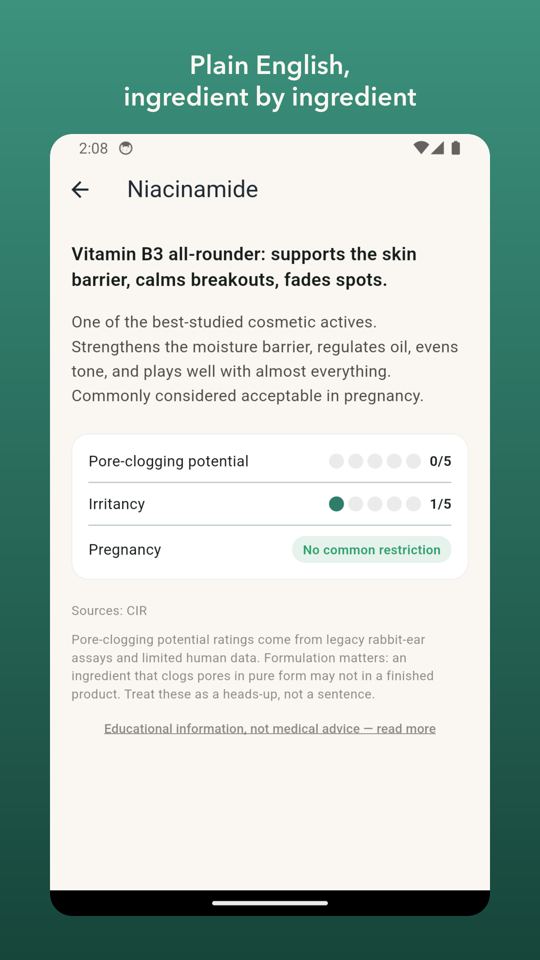
- Ingredient pages show the rating. Tap a watch-out or a "Good for you" ingredient to open its page: "Pore-clogging potential" from 0 to 5, irritancy, and a note that the ratings come from legacy rabbit-ear assays and limited human data. Ingredients the knowledge base doesn't cover yet appear as plain grey chips in the full list; press and hold one and it says "No data yet".
- Ratings only count when they're relevant. Pore-clogging deductions apply only if your Skin Profile says oily or combination skin, or you chose the breakouts/acne concern. A 3 deducts 10 points; a 4 or 5 deducts 20.
- Position changes the weight. The first five spots count 1.5×, spots 6–10 count 1×, later spots 0.5×, and "may contain" entries 0.25×.
- The pile-up is capped. Pore-clogging deductions stop at 40 points, so they can push a label to "Use with caution" but never to "Likely to clash" on their own.
So the same coconut body butter label reads differently for two people. For an oily, breakout-prone profile, the coconut oil and cocoa butter at the top are flagged as "High pore-clogging potential (4/5) for breakout-prone skin". For a dry profile with no breakout concern, those ratings cost nothing. Pick "Not sure" for skin type and the app treats you as combination, so the watch-outs stay on until you change it in Settings. The same ingredient list with the same profile always gives the same verdict. For a full walkthrough, see how to tell if a product is right for your skin. DermDecode is available on iPhone and Android; see how it works.
When to see a dermatologist
A rating can't diagnose anything. See a board-certified dermatologist if breakouts are persistent, painful, worsening or leaving marks, or if you're not sure they're acne at all. If you're pregnant or nursing, talk to your OB/GYN or dermatologist before changing your routine.
Frequently asked questions
What comedogenic rating is considered high?
On the 0–5 scale, 4 and 5 are high; Fulton's 1989 paper counted them as positive results. DermDecode treats 3 as moderate and deducts from 3 up, but only for oily, combination or breakout-prone profiles.
What does non-comedogenic mean?
The brand is saying the product isn't expected to clog pores. In the US the FDA doesn't approve cosmetic claims or labels before sale, though claims must be truthful and not misleading, and there's no standardized test behind the word. It's a first filter, not a guarantee.
Is coconut oil comedogenic?
It rates high (4 in DermDecode's knowledge base) on tables that mostly reflect tests of the pure oil. That matters most for leave-on face products on oily or breakout-prone skin, and much less for dry skin or body products.
Are comedogenic ratings accurate?
They're a rough guide. They come largely from rabbit-ear assays with limited human data, and later studies found inconsistent results on human skin. A small 2006 study found finished products made with comedogenic ingredients weren't necessarily comedogenic.
Please note. DermDecode provides general cosmetic-ingredient information for educational purposes. It is not medical or dermatological advice and may contain errors. Patch-test new products. If you are pregnant or nursing, consult your OB/GYN or dermatologist before changing your routine.